What would this job cost?
Rough it out here. Nothing is saved and no proposal is created. When the number looks right, send it to the builder.
The building
The numbers behind it
Cost settings feed every price on the right. Saving edited production rates per account is Solo ($19/mo).
Production rates per area type are Outscoped defaults. Below 5x / week a soil multiplier raises hours per visit (1x / week 1.5x, Bi-Weekly 1.6x, Monthly 1.75x, Bi-Monthly 2x, Quarterly 2.25x): the less often you clean, the heavier each visit runs. Prefer area-by-area control? Advanced calculator →
How to use a cleaning bid calculator without underpricing the job
A commercial cleaning bid calculator is only as good as the walkthrough inputs. Square footage matters, but so do restroom counts, traffic patterns, floor types, visit frequency, supply responsibility, keys and alarm access, daytime versus after-hours service, and whether periodic project work belongs in the monthly price or as an add-on.
Inputs to collect before pricing
- Approximate square footage by area type, not just one building total.
- Visits per week and whether any areas are cleaned less often.
- Restroom fixture counts, breakroom use, trash volume, and public traffic.
- Floor material, carpet lanes, VCT finish condition, and periodic floor care needs.
- Wage assumptions, payroll burden, supplies, overhead, and target margin.
What the calculator should not replace
The number here is an estimate, not a signed scope. Before sending a proposal, confirm what tasks happen daily, weekly, monthly, semi-annually, or annually. Separate recurring janitorial work from carpet extraction, strip-and-wax, machine scrubbing, window cleaning, and other optional services so the client can compare prices clearly.
Good, Better, Best pricing
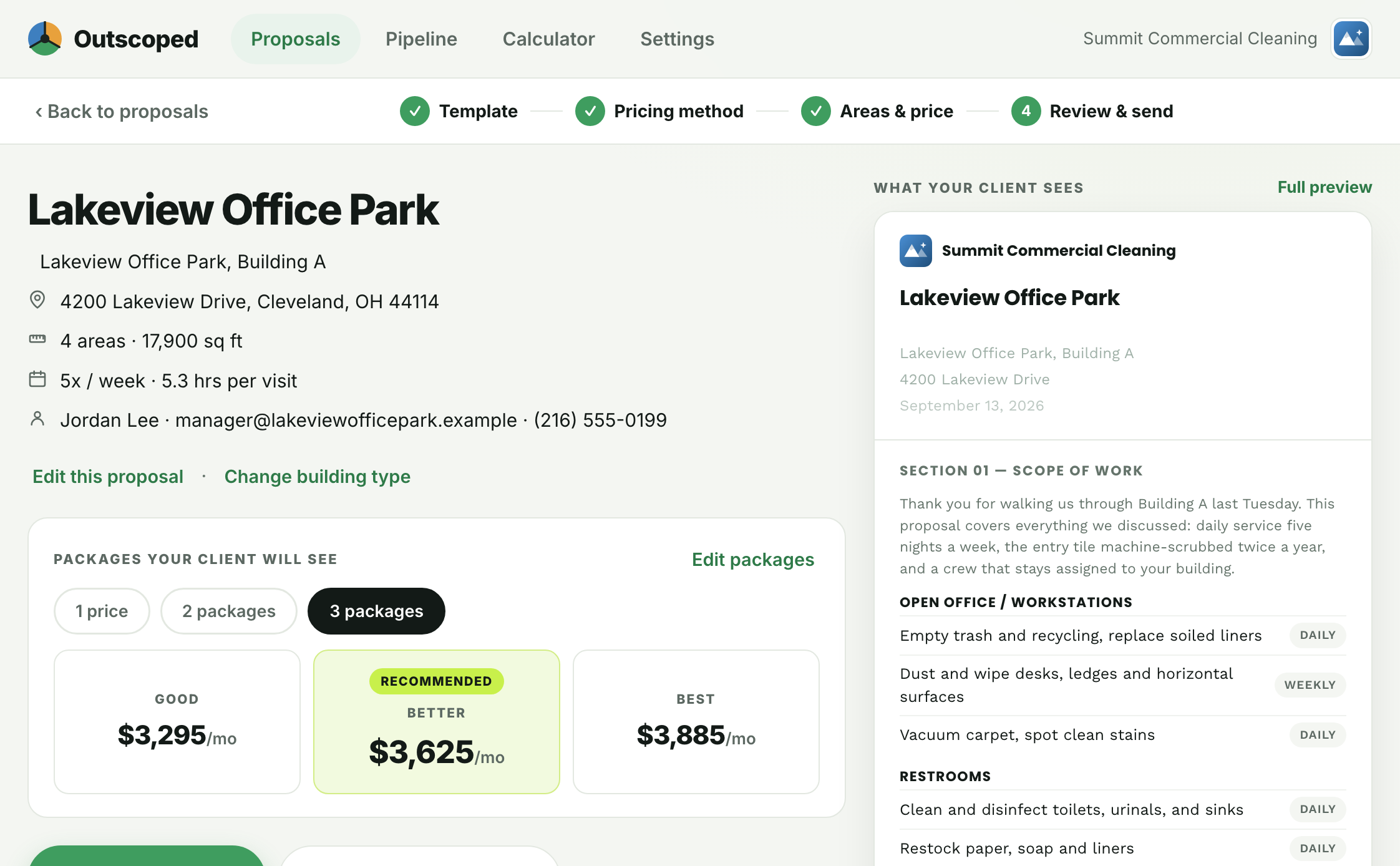
Outscoped shows three package prices because commercial cleaning buyers often need choices. Good can cover the baseline scope, Better can add weekly detail rotation, and Best can include periodic services. The proposal should explain the difference in plain language instead of hiding it in a spreadsheet.
From estimate to proposal
Once the monthly price looks right, start a proposal and turn the calculation into a client-facing document. Add the building name, scope of work, service agreement, optional add-ons, and a signature path so the client can approve the bid without asking for a redesigned PDF.
Cleaning bid calculator FAQ
What is a production rate? It is the estimated square feet a cleaner can complete per hour for a specific area type. Restrooms usually run slower than open office space, and less frequent cleaning can take longer per visit.
Should I include supplies? If your company provides consumables or cleaning supplies, include them in the pricing assumptions or separate them clearly in the proposal.
Why does margin matter? Labor cost is not the final price. Burden, supplies, overhead, supervision, callbacks, and profit margin all affect whether the job is worth winning.
How often should production rates be adjusted? Review them when wage costs change, when a crew consistently beats or misses budgeted hours, or when a facility type performs differently than expected. Medical, education, retail, office, and floor-care work should not all be priced from one generic assumption.
What belongs in the final proposal? Include a plain-language cover letter, the building areas, every task and frequency, three pricing options when useful, optional services, service agreement terms, and a clear signature step. A clean proposal makes the price easier to defend because the buyer can see what the number includes. The goal is not to show every internal calculation; it is to show enough scope detail that the monthly price feels traceable, specific, and ready to approve.
What if the calculator price feels too high? Do not cut margin blindly. Recheck the scope, visit frequency, square footage, production rate, and optional services first. Sometimes the answer is a smaller base scope plus add-ons; other times the building is simply more expensive to service than the buyer expected. Document that logic before presenting the final number.
What should be reviewed after the estimate? Compare the calculator output against the building walkthrough before you quote. Look for mismatched area types, underestimated restroom time, heavy trash, specialty floor care, locked rooms, after-hours restrictions, unusually slow elevators, parking or dock limits, and supplies the client expects you to provide. Small operational details can change labor hours more than the headline square footage.
How should the number be presented to the client? Use the estimate as the internal starting point, then send a proposal that explains the scope. A buyer should see the facility areas, service frequencies, package differences, optional add-ons, agreement terms, and signature step. The calculator helps you avoid guessing; the proposal helps the client understand and accept the price. If a prospect challenges the estimate, you can point back to the labor assumptions instead of negotiating from a vague monthly total and protect the job margin before sending.
See a sample proposal or read the commercial cleaning bidding guide.